


Visual design
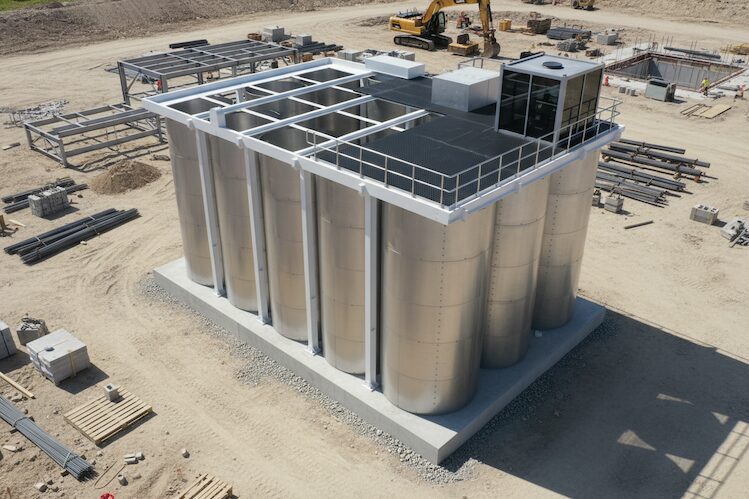
Visual design of water storage tanks allows investors and designers to obtain a clear and accurate picture of the facility’s appearance and its integration into the surrounding environment even before construction begins. 3D visualizations help align technical and aesthetic decisions, thereby reducing costs arising from later modifications. Such visualizations also serve as effective communication tools during permitting procedures and public consultations. Detailed renderings support the optimal selection of materials, colors, and surface finishes. In addition, they enable the early identification of design-related risks. Overall, visual design enhances project transparency and contributes to successful implementation.
Wind loading calculation
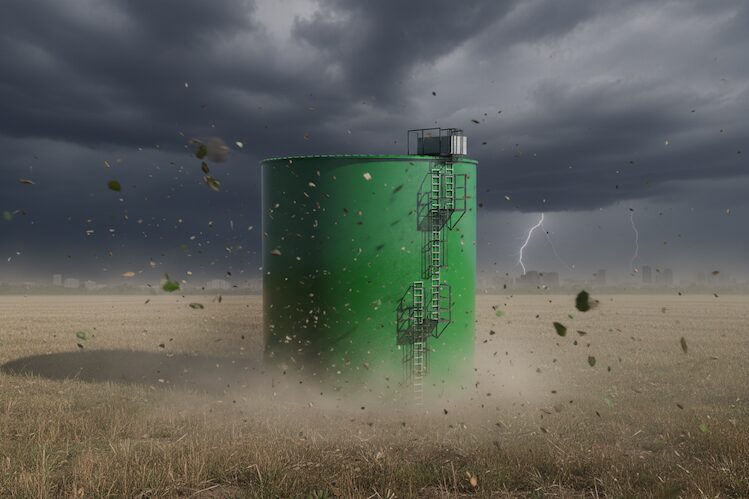
In general two important factors play a role in the formation of wind conditions, the basic flow determined by the general circulation, and the modifying effect of the topography. In Hungary for example, the prevailing wind direction is NW. The current value of the wind speed is largely determined by local factors. Based on the average wind speed, Hungary can be classified as a moderately windy region, the annual average of the wind speed varies between 2-4 m/s, but locally significantly different values can also be observed. In Hungary, on average 122 windy days occur every year (that is, when the speed of the strongest wind gust reaches or exceeds 10 m/s), and 35 of these days are stormy (that is, the number of times the wind gust is greater than 15 m/s). If the tank is/may be exposed to wind currents, the wind load must be measured. The wind load of the tanks we manufacture, deliver and install is usually 45m/s (=162km/h).
Snow loading calculation
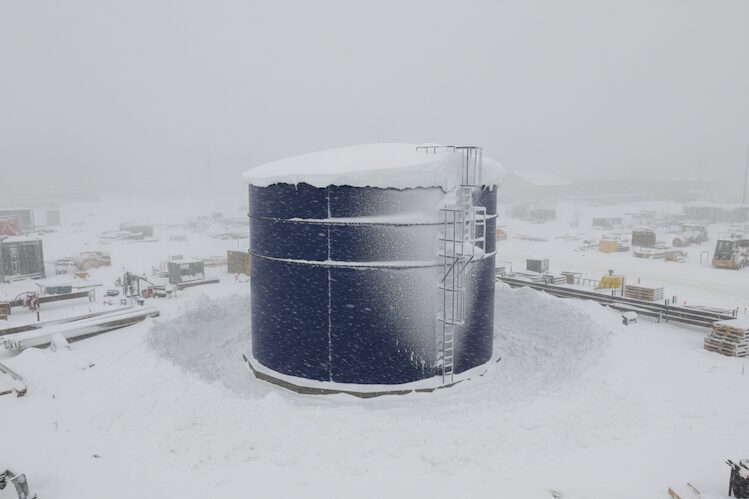
The climate of Hungary is continental, with cold winters and warm to hot summers. Precipitation is quite common in winter, often in the form of snow or sleet. The annual average number of snowy days is less than 40 in the plains, and no more than 120 in the mountains. During the last 40 years, the annual number of snowy days (when at least 1 cm of snow fell) decreased from 15 days to 11 days, but the decrease became more spectacular in the last 10 years. When determining the snow load of the roof, the maximums of the past periods and the human loads resulting from maintenance must also be taken into account. Depending on the location and the customer’s requirements, the roof structure can be made with single, double Z support elements and in a thermally insulated design. In order to cover the full spectrum, our roof structures are designed and made between 0.75kN and 4kN /m2 roof loading.
Seismic design calculation
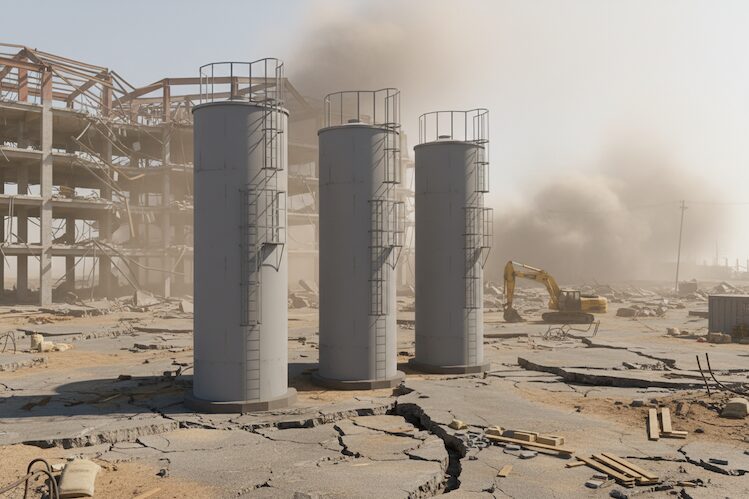
In Hungary, 100-120pcs of less then 2.5 magnitude earthquakes are registered every year, most of which do not reach the limit of perceptibility. Larger ones occur less often, but with a typical return time. Four to five 2.5-3 magnitude earthquakes per year can be expected in the country in the vicinity of the epicenter, but which have not yet caused damage. An earthquake causing significant damage occurs every 15-20 years, while a strong, damaging earthquake of magnitude 5.5-6 occurs every 40-50 years. In the countries of the European Union, a uniform earthquake standard (Eurocode) is in force, which defines in detail the methods of earthquake-proof design. We work either alongside these local requirements or according to Factory Mutual’s guidance. In the case of seismic sizing, it is always important to know the exact location of the tank installation.
Thermal insulation / heat loss calculation
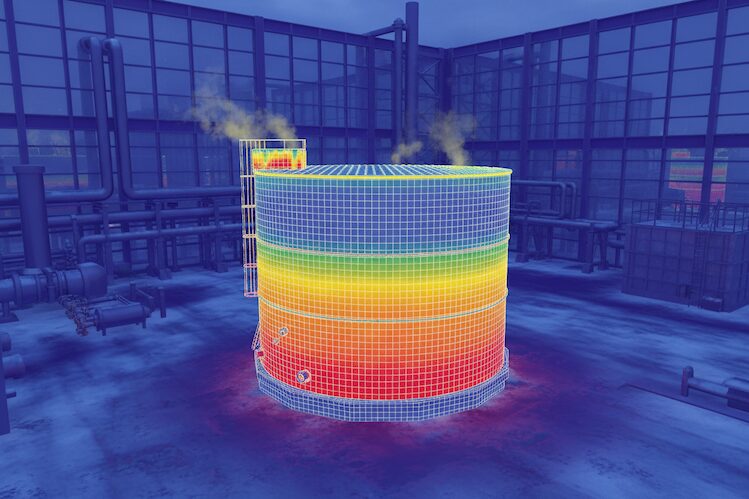
Due to the European climatic characteristics, tanks established in Hungary are exposed to freezing risk. Due to the usually large amounts of water stored in the tanks, the liquid temperature slowly decreases (a few °C per day). In order to avoid the danger of freezing and the likeliness of physical damages, it is recommended to use a heating system and thermal insulation to compensate heat loss. The guiding principle is to take as a basis the minimum temperature valid for several decades at the location of the tank installation and that should be the reference point for the heat loss calculation. It is recommended to fix the activation temperature of the heating system (immersion heaters) at +5°C to avoid freezing damages. Our tanks usually include 3 or 6 kW immersion heaters as a standard, but we also do supply heat insulated panels for tank shell and sandwich type tank roof elements for heat protection.

Surface protection, corrosion resistancy guidance
Inadequate surface protection can cause serious damage(s) to steel structures. Depending on the degree of corrosion, we may encounter aesthetic problems, but also more serious structural damage(s). The application of surface protection systems that meet the requirements helps to ensure the long-term protection of steel structures, thus avoiding very expensive complete renovations, operational downtime periods. In order to mitigate those risks, we offer several types of surface protection: standard galvanized, galvanized + powder-coated surface protection and so-called “glass coating” epoxy surface protection, which can also meet the strictest (C5-I) industrial environmental requirements defined by the ISO 12944 standard.
In case if you have any further question to us
please feel free to contact to our office and ask for our colleagues.